
The High-Stakes World of Federal RICO Trials
What Makes RICO Cases Uniquely Complex
Federal RICO (Racketeer Influenced and Corrupt Organizations) trials are not your typical courtroom battles. They are sprawling, multi-layered prosecutions designed to dismantle entire criminal enterprises rather than target isolated crimes. Imagine trying to untangle a web where every thread connects to another crime, another person, another motive. That is exactly what prosecutors attempt to do in these cases. The stakes are enormous, often involving life sentences, and the evidence is typically built over years of surveillance, informants, and wiretaps.
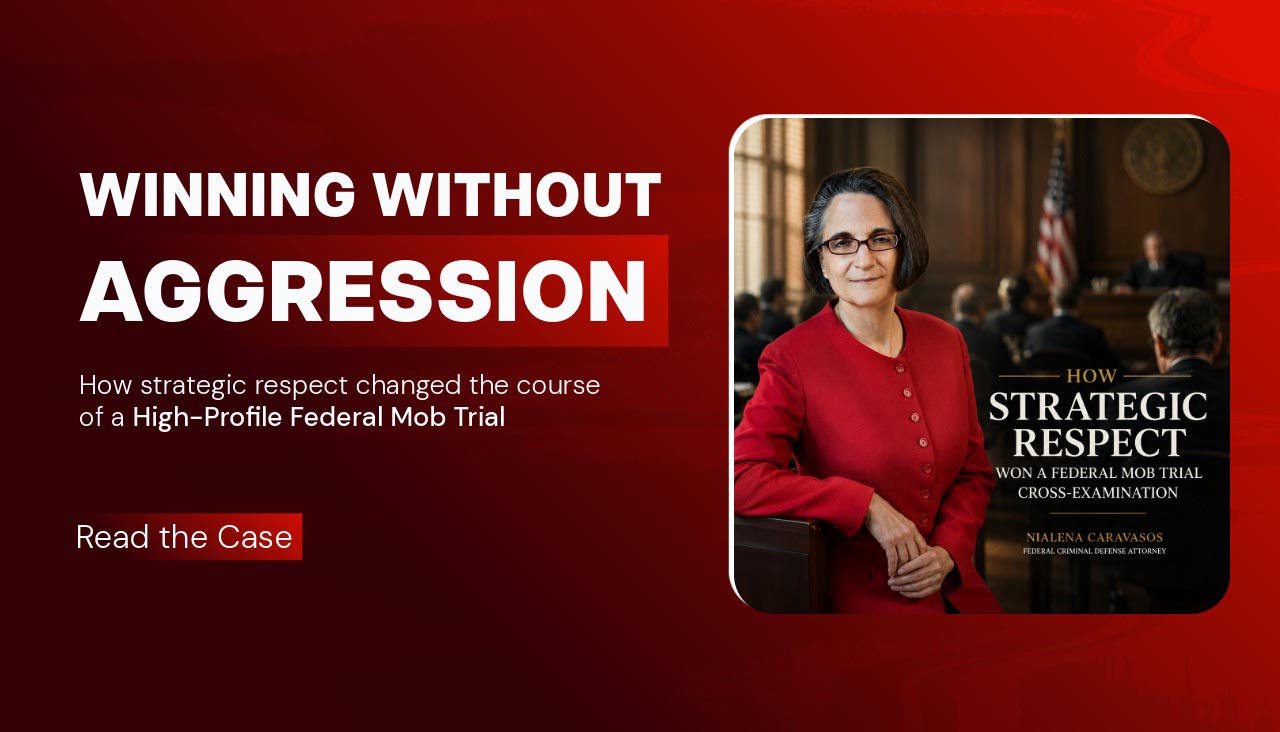
In a recent episode of the second longest-running nationally syndicated radio show, Price of Business, titled “Sophisticated Mob Boss Meets High-Level Negotiation Strategies,” NiaLena Caravasos breaks down the psychology behind high-stakes courtroom strategy. Her insights, shared on a nationally syndicated platform, highlight how negotiation principles can redefine cross-examination dynamics.
Listen to the full discussion here.
What makes RICO cases even more challenging is the sheer volume of testimony and documentation. Jurors are asked to process weeks or even months of complex narratives involving multiple defendants. In many cases, the success of the prosecution hinges on the credibility of insiders who have turned against their own organizations. These witnesses are often flawed individuals with criminal histories, making their testimony both powerful and vulnerable.
For defense attorneys, the battlefield is not just about facts. It is about perception. How do you convince a jury to question a witness who claims insider knowledge of a criminal empire? That is where cross-examination becomes an art form rather than a simple legal procedure.
The Role of Cooperating Witnesses in Organized Crime Trials
Cooperating witnesses are the backbone of many organized crime prosecutions. Without them, it would be nearly impossible to penetrate the secrecy that defines criminal organizations. These individuals provide firsthand accounts of illegal activities, internal hierarchies, and decision-making processes. However, their credibility is always under scrutiny.
Ralph Natale stands out as a particularly significant figure in this context. He was not just another informant. He was a boss. His testimony carried immense weight because it came from the top of the organization. According to historical records, Natale became the first sitting American Mafia boss to cooperate with federal authorities, breaking a long-standing code of silence known as Omerta.
This kind of testimony can be a double-edged sword. On one hand, it provides unparalleled insight into criminal operations. On the other, it raises questions about motivation. Why would someone at the pinnacle of power suddenly turn against their own organization? The answer to that question often becomes the focal point of cross-examination.
Ralph Natale and the Collapse of Omerta
The First Mafia Boss to Break the Code
For decades, the Mafia operated under a strict code of silence known as Omerta. Breaking this code was unthinkable. It was not just a betrayal of the organization; it was a betrayal of identity. Natale shattered this tradition when he agreed to testify against his own associates in 1999, marking a historic turning point in organized crime prosecutions.
His cooperation sent shockwaves through both the criminal underworld and law enforcement agencies. If a boss could flip, then no one was untouchable. Prosecutors suddenly had a powerful tool at their disposal, while defense attorneys faced a new kind of challenge. How do you discredit someone who was once at the very top?
Natale’s testimony was extensive, spanning multiple days and covering a wide range of alleged crimes. His role as a star witness made him the centerpiece of the prosecution’s case. But it also made him a prime target for cross-examination.
Why Natale Chose to Cooperate with Federal Authorities
Understanding Natale’s motivations is key to understanding the strategy that ultimately succeeded against him. Public records indicate that he began cooperating after facing serious criminal charges that could have resulted in a life sentence. On the surface, this seems straightforward. He wanted to reduce his punishment.
Understanding why witnesses cooperate goes far beyond legal pressure. In many cases, emotional triggers such as betrayal, fear, or loss of status play a decisive role. This psychological layer is explored further in Unraveling the True Motives Behind White-Collar Crime, where deeper behavioral patterns reveal why individuals turn against their own networks.
But human behavior is rarely that simple. Natale’s decision was also influenced by personal factors, including feelings of betrayal and lack of support from his own organization. When individuals feel disrespected or abandoned, they often seek ways to regain control or dignity. This psychological dimension played a crucial role in how he responded to different cross-examination styles.
The Philadelphia Mob Trial That Captured National Attention
Overview of U.S. v. Joseph Merlino
The trial of U.S. v. Joseph Merlino was one of the most high-profile organized crime cases in modern American history. It involved multiple defendants and a wide array of charges, including racketeering, murder, attempted murder, and extortion. The case was built on years of investigation and relied heavily on testimony from cooperating witnesses like Natale.
The courtroom became a stage where legal strategy, personality, and psychology intersected. Each defense attorney had their own approach, their own style, and their own theory of the case. This created a dynamic environment where the effectiveness of different strategies could be directly compared.
For the jury, the experience was overwhelming. Days turned into weeks, and weeks into months. The constant flow of testimony, arguments, and evidence made it difficult to maintain focus. In such an environment, the way information is presented becomes just as important as the information itself.
The Multi-Defendant Courtroom Battlefield
With multiple defendants comes multiple defense teams, each vying for the jury’s attention. This often leads to repetitive questioning and overlapping strategies. In the Merlino trial, cross-examination of Natale stretched over several days, with each attorney attempting to undermine his credibility.
The result was what could only be described as a courtroom “bloodbath.” Attorneys attacked aggressively, challenging Natale on every detail and inconsistency. While this approach might seem effective on paper, it had unintended consequences.
The jury grew fatigued. The constant hostility blurred the lines between truth and theatrics. Instead of clarifying the issues, the aggressive tactics created confusion and diminished the overall impact of the cross-examinations.
Cross-Examination as a Psychological Battlefield
Traditional Aggressive Tactics Used by Defense Attorneys
Aggression has long been a staple of cross-examination. The idea is simple. Apply pressure, expose inconsistencies, and force the witness to reveal weaknesses. In many cases, this approach works. It can shake a witness’s confidence and create doubt in the minds of the jury.
But aggression is not a one-size-fits-all solution. It depends heavily on the personality of the witness and the context of the case. Some witnesses respond well to pressure, while others become more defensive and combative.
In the Merlino trial, Natale proved to be the latter. Instead of crumbling under pressure, he matched the intensity of the attorneys. The exchanges became heated, almost theatrical, and ultimately unproductive. And neither the attorneys nor Natale looked good in this “bloodbath”.
Why Aggression Failed in This Case
The failure of aggressive tactics in this case highlights an important lesson. Cross-examination is not just about asking questions. It is about managing human behavior. When a witness feels attacked, they are more likely to resist, deflect, or even retaliate.
In Natale’s case, the aggressive approach played into his strengths. It allowed him to adopt a combative stance and portray himself as a resilient figure. This not only reduced the effectiveness of the questioning but also risked alienating the jury.
After days of this approach, it became clear that a different strategy was needed. The question was, what could possibly succeed where aggression had failed?
NiaLena Caravasos’ Strategic Shift
Choosing to Go Last in Cross-Examination
Timing can be everything. By choosing to go last, NiaLena Caravasos positioned herself to learn from the mistakes and successes of others. She observed the patterns, the reactions, and the overall dynamics of the courtroom.
This decision required patience and confidence. It meant waiting through days of testimony and resisting the urge to jump in early. But it also provided a unique advantage. She had a complete picture of what worked and what did not.
This strategic positioning set the stage for a radically different approach.
Observing Patterns and Identifying Weaknesses
Observation is a powerful tool. By carefully watching the interactions between Natale and the other attorneys, NiaLena identified a key insight. Natale was not just responding to questions. He was reacting to how he was being treated.
This realization shifted the focus from content to psychology. Instead of asking, “What questions should I ask?” the question became, “How should I approach this witness?”
That subtle shift made all the difference.
Applying Negotiation Theory Inside the Courtroom
Influence of “Getting to Yes” on Legal Strategy
Getting to Yes: Negotiating Agreement Without Giving In is a classic negotiation guide that has been around for close to half a century. But its teachings are as true today as they were in the 1980s when it was written and when NiaLena read it while studying at The Wharton School, and it continues to be on the reading list of many business schools throughout the country to this day. Its methodology for reaching mutually acceptable agreements in any conflict is invaluable in the boardroom and in diplomacy and in every situation where the parties want to negotiate an agreement. The principles outlined in “Getting to Yes” emphasize mutual respect, understanding interests, and finding common ground. While these concepts are typically applied in business negotiations, they can be just as effective in the courtroom.
NiaLena recognized that Natale had an unmet need. He wanted respect. He wanted to restore his dignity in front of the jury. By addressing this need, she could create an environment where witness cooperation was more likely.
This approach was unconventional, especially in a high-stakes criminal trial. But it was precisely this unconventional thinking that made it effective.
Translating Business Negotiation into Trial Tactics
Applying negotiation theory to cross-examination requires creativity. It involves treating the interaction as a dialogue rather than a confrontation. Instead of trying to dominate the witness, the goal is to guide them.
This does not mean abandoning rigor or precision. It means delivering questions in a way that encourages honest and complete answers. It is a subtle but powerful shift in strategy.
The Turning Point: Respect Over Confrontation
Understanding Natale’s Emotional Motivations
At the heart of this strategy was a deep understanding of human emotion. Natale’s decision to cooperate was not purely rational. It was influenced by feelings of betrayal and a desire for respect. When Natale had previously gone to prison for a drug offense, he expected the underboss to take care of his family. His wishes were not honored and he felt disrespected.
By acknowledging these emotions, NiaLena was able to connect with him on a different level. This connection created a sense of mutual respect that had been absent in previous cross-examinations.
The Silent Negotiation at the Podium
When her turn finally came, something unexpected happened. There was no immediate barrage of questions. Instead, there was silence. A moment of stillness that allowed both parties to reset.
It was in silence that NiaLena negotiated with Natale the terms of the cross-examination. With her eyes, she let him know that she would not disrespect him or try to make him look bad in front of the jury. And he, in turn, silently let her know that he would respond in kind.
This silent exchange acted as a form of negotiation. It communicated intent without words. It established boundaries and expectations. And it set the tone for everything that followed.
And so, it began and no one could quite figure out what was going on because the hostility had ended. NiaLena gave Natale respect and allowed him to behave like a gentleman toward her and restore his dignity.
Results That Redefined Cross-Examination
Extracting Key Testimony in Minutes
The results spoke for themselves. In a fraction of the time it took others, NiaLena was able to extract the information she needed. The tone remained calm, the answers were clear, and the process was efficient. NiaLena did not attack Natale and try to belittle him. Instead, she realized that she needed to find something that was valuable to Natale and that she could give him at no cost to her, and she did. Respect and dignity. And in turn, he gave her every answer that she was looking for. In less than half an hour, NiaLena had gotten all the information that she needed from him for her defense of her client, alleged made mafia member Frank Gambino.
This outcome demonstrates the power of strategic thinking. By focusing on the human element, she achieved what others could not.
Impact on Jury Perception and Case Outcome
Juries are not just evaluating facts. They are evaluating behavior. The contrast between aggressive and respectful approaches was stark. It highlighted the effectiveness of the latter and reinforced the credibility of the defense.
In the end, this strategy played a crucial role in shaping the narrative of the case and contributed to a favorable outcome for her client. It demonstrated that precision and psychological awareness could outperform traditional aggressive tactics in even the most high-stakes trials.
This strategic approach is not theoretical. It reflects real courtroom experience in complex federal cases involving organized crime. For a closer look at similar outcomes and defense strategies, explore NiaLena Caravasos’ organized crime case successes.
Conclusion
The story of this cross-examination is more than just a legal anecdote. It is a lesson in strategy, psychology, and the power of respect. It challenges conventional wisdom and demonstrates that sometimes the most effective approach is the one that no one expects. In a world where aggression often dominates, this case serves as a reminder that understanding and empathy can be just as powerful, if not more so.
Frequently Asked Questions
1. What is a RICO trial?
A RICO trial is a federal prosecution targeting organized crime operations by linking multiple criminal acts to a single enterprise.
2. Why was Ralph Natale significant?
He was the first American Mafia boss to cooperate with federal authorities, breaking the long-standing code of silence.
3. What made this cross-examination unique?
It relied on respect and psychological insight rather than aggression, leading to more effective results.
4. How did negotiation theory apply in court?
Principles from negotiation were used to build rapport and encourage cooperation from the witness.
5. What lesson can lawyers learn from this case?
Understanding human behavior and adapting strategy accordingly can be more effective than relying on traditional tactics.


