
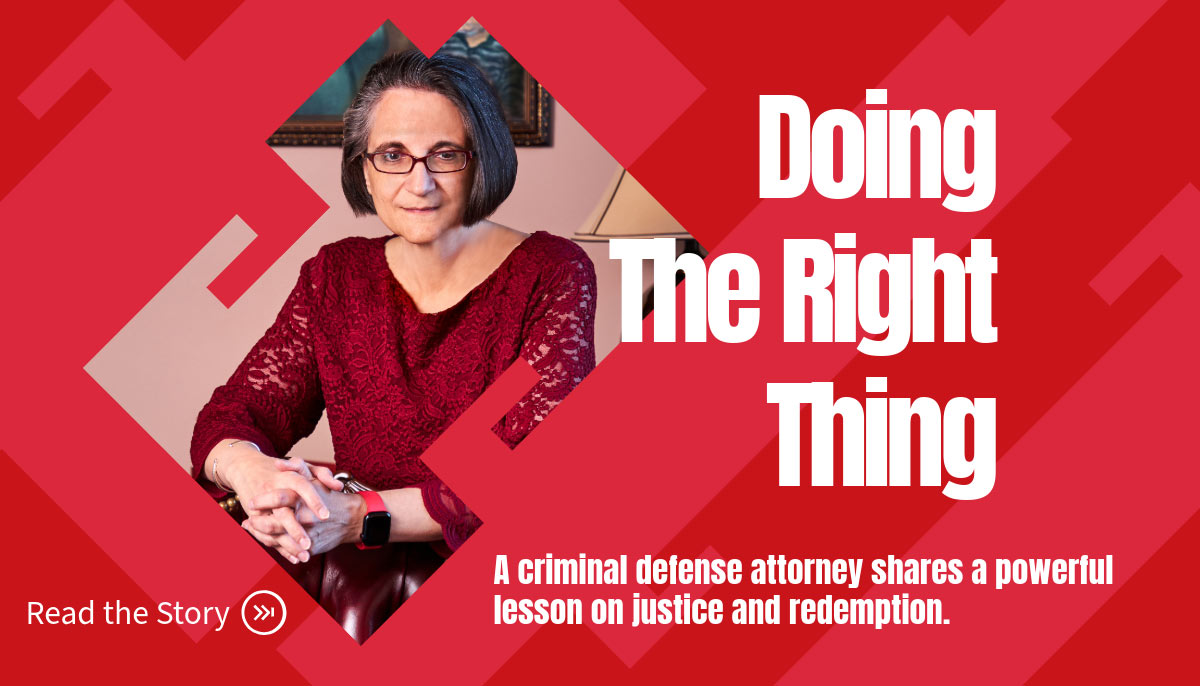
Introduction: Why Doing the Right Thing Still Matters
In a world often overshadowed by crime, fear, and uncertainty, the principle of doing the right thing remains one of the most powerful forces for justice and redemption. In a recent episode titled “Doing the Right Thing Brings Light to the Darkness” on the nationally syndicated Price of Business radio show, criminal defense attorney NiaLena Caravasos explored this idea through real-life experience and current events.
Her discussion centered around the mysterious disappearance of Nancy Guthrie in February 2026, a case that has captured national attention. The emotional pleas from her daughter, NBC Today Show host Savannah Guthrie, have reminded the public of a powerful truth: even in the darkest moments, it is never too late for someone to do what is right.
NiaLena’s discussion reflects broader insights she has shared about criminal behavior and accountability, including in her article Unraveling the True Motives Behind White-Collar Crime, which examines the psychological and ethical factors that influence criminal decision-making.
Drawing from her own legal experience in a death penalty case, NiaLena illustrated how guilt, redemption, and moral responsibility can shape the outcome of even the most tragic situations.
The Nancy Guthrie Disappearance That Captured National Attention
At the beginning of February 2026, the unexplained disappearance and presumed abduction of Nancy Guthrie sent shockwaves across the country. As investigators searched for answers, Savannah Guthrie made several public appeals asking anyone with information to come forward.
In one of her most emotional statements, Savannah quoted Nelson Mandela, urging those responsible or anyone with knowledge of the situation to remember:
It’s never too late
to do the right thing.
Her message carried both compassion and urgency. She emphasized that those involved are not beyond redemption and that every human being possesses an essential goodness that can still guide them toward truth.
This plea formed the foundation of the conversation between NiaLena Caravasos and Price of Business host Kevin Price, during which they discussed an important question:
What happens when someone becomes trapped in a terrible situation they never intended? Is it still possible to do the right thing after a serious crime has already occurred?
When People Become Trapped in Their Own Actions
Criminal cases often reveal a complex psychological reality. Many crimes do not begin with malicious intent but evolve from poor decisions, panic, or unexpected circumstances.
NiaLena explained that individuals sometimes find themselves in situations that spiral out of control. Once the damage has been done, fear and shame can prevent them from stepping forward.
However, she believes that there are times when moral awareness eventually resurfaces, pushing individuals toward accountability.
To illustrate this point, NiaLena shared the story of a young client she once represented in a death penalty case involving first-degree murder.
A Death Penalty Case That Revealed the Power of Conscience
The young man NiaLena defended faced the possibility of execution following his arrest for murder. As part of the defense strategy, NiaLena and her investigator followed several leads provided by the client in hopes of uncovering evidence that could prove his innocence.
Unexpectedly, the investigation began revealing evidence pointing toward the client’s guilt.
At first glance, this seemed contradictory. Why would someone facing the death penalty guide investigators toward incriminating evidence?
NiaLena eventually realized the answer: the young man’s own conscience was leading the way.
He could not live with what he had done.
The Psychological Burden of Guilt
NiaLena compared the young man’s internal struggle to Raskolnikov, the protagonist in Fyodor Dostoevsky’s classic novel Crime and Punishment.
In the novel, Raskolnikov commits a terrible crime but becomes psychologically overwhelmed by guilt. His conscience eventually forces him toward confession and punishment.
NiaLena saw the same pattern in her client. Although he initially attempted to assist the defense in finding evidence that might exonerate him, his actions subconsciously guided investigators and his lawyer toward the truth.
This behavior reflected a powerful psychological reality: guilt often demands accountability.
For some individuals, accepting punishment becomes the only path toward peace. In this case, the young man knew that he could not go on with his own life until he was punished for having taken a life.
Saving a Life: Avoiding the Death Penalty
Despite the serious charges against her client, NiaLena succeeded in saving him from the death penalty.
The case could have ended there. And it would have ended there with most other attorneys. However, NiaLena believed that justice should not stop with sentencing. She saw potential for redemption in the young man and challenged him to rebuild his life.
Her message to him was simple but profound:
If you cannot change the past, you can still change the future. If you really want to thank me, you’ll make something of your life and show me that I did not waste my time and, more importantly, my heart on you.
Redemption Through Education and Personal Growth
The young man vowed to make NiaLena proud. While incarcerated, he began transforming his life.
With NiaLena’s encouragement and guidance, he pursued education and self-improvement. His progress included:
- Learning to read and write
- Earning his GED
- Completing a college degree while in prison
Over time, he became a role model within the prison community.
Correctional authorities recognized his dedication and trustworthiness. Eventually, prison officials granted him significant responsibility and freedom inside the facility.
His remarkable transformation even led authorities to support his early parole recommendation.
This story demonstrates that redemption is possible when remorse becomes the driving force behind change.
The Difference Between Reward and True Remorse
During the radio discussion, NiaLena emphasized a critical distinction.
Doing the right thing must come from internal moral conviction, not external incentives.
In high-profile cases such as the disappearance of Nancy Guthrie, rewards are often offered for information. While financial incentives may encourage cooperation, they rarely inspire genuine accountability.
NiaLena argued that meaningful change occurs when individuals act because their conscience demands it, not because they expect compensation.
Her former client chose accountability because he understood the gravity of taking another life. That realization motivated him to face the consequences and rebuild himself from within.
The Moral Wisdom of Martin Luther King Jr.
NiaLena concluded the discussion by referencing the timeless wisdom of Dr. Martin Luther King Jr., who famously stated:
The time is always right
to do what is right.
This quote perfectly captures the message she hopes will resonate with anyone connected to the Nancy Guthrie case or any other similarly tragic situation.
No matter how serious the mistake or how late the moment may seem, the opportunity to choose integrity never disappears.
How Society Can Help People Find Their Way Back
While personal accountability is essential, NiaLena also believes society plays an important role in supporting redemption.
When individuals show genuine remorse, communities and institutions can help them rebuild their lives.
Examples include:
- Educational programs in correctional facilities
- Rehabilitation and counseling initiatives
- Opportunities for early parole when rehabilitation is evident
- Mentorship programs for incarcerated individuals
These systems provide a path forward for those who sincerely seek to change.
The story of NiaLena’s client proves that people who once lost their way can still become positive contributors to society.
Why the Message of Hope Matters Today
The disappearance of Nancy Guthrie remains a painful and unresolved situation. For Savannah Guthrie and her family, every day without answers brings uncertainty and heartbreak.
However, the message shared by NiaLena Caravasos offers hope.
Even in the most difficult circumstances, the human conscience retains the ability to guide individuals toward truth and accountability.
History shows that people often surprise us with their capacity for courage and redemption.
When individuals choose honesty over fear and responsibility over silence, they illuminate the path out of darkness.
Final Thoughts: Light in the Darkness
The lesson from this discussion is both simple and profound.
Doing the right thing is not always easy. It may require admitting mistakes, accepting consequences, and confronting painful truths.
Yet the act of choosing integrity can transform lives.
As Nelson Mandela reminded the world, it is never too late to do the right thing. And as Martin Luther King Jr. taught us, the time to act with moral courage is always now.
For anyone who finds themselves holding information, carrying guilt, or standing at a moral crossroads, the path forward remains open.
Sometimes the smallest act of truth can bring light into the darkest places.


