
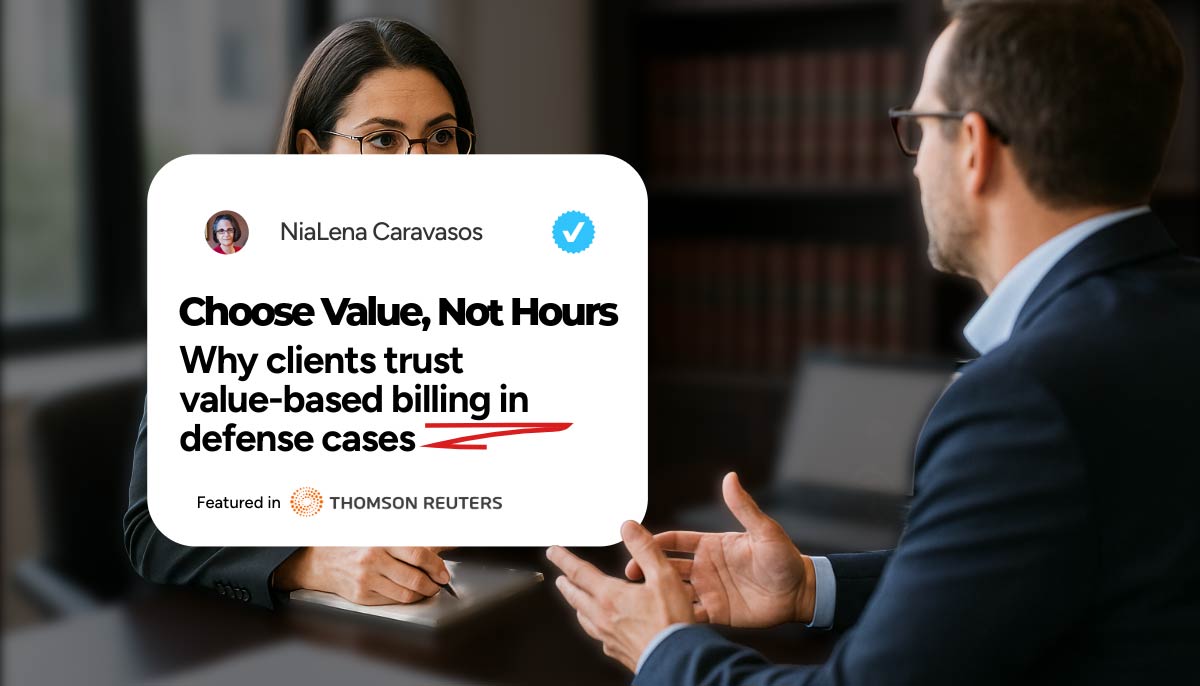
Rethinking Legal Fees: Moving Beyond Hourly Billing
The legal industry has long relied on the familiar model of hourly billing. Clients, especially those seeking federal criminal defense or white-collar crime representation, are accustomed to watching the clock tick as their attorneys work on their cases. However, the tide is turning as more clients demand transparency, predictability, and genuine value for their hard-earned money. In a recent Thomson Reuters feature, respected Philadelphia federal criminal defense attorney NiaLena Caravasos shared her pioneering perspective on why the traditional approach to legal fees no longer serves the best interests of clients — and how value-based billing can transform the attorney-client relationship.
The True Value of Legal Representation
For decades, “you get what you pay for” has shaped expectations in the legal field. Yet, as consumers become increasingly savvy and budget-conscious, they want to feel that their investments in legal services are not just necessary but worthwhile. Value-based billing is emerging as a powerful alternative to hourly rates, emphasizing client satisfaction and tangible results over time spent.
NiaLena Caravasos, whose career is rooted in federal criminal defense and white-collar cases, advocates for a more holistic, client-centric fee structure. She believes that the conventional hourly system often places unnecessary stress on both attorneys and clients — and may even hinder the deep level of trust and understanding that is essential in high-stakes criminal matters.
NiaLena Caravasos’ Unique Approach: Building Trust, Not Tracking Hours
NiaLena Caravasos stands apart in her field precisely because she refuses to reduce her client relationships to a simple tally of billable hours. “I find that billing hourly interferes with the type of relationship I want to have with clients,” she told Thomson Reuters. Her perspective is informed by years of experience navigating the complexities of federal court, where outcomes often hinge on trust, rapport, and nuanced knowledge of each client’s background.
By moving away from the hourly model, Caravasos is able to spend significant time getting to know her clients — far beyond what would be financially feasible in a strict hourly framework. “I spend a lot of time getting to know them. I want to get to know everything about them. When I’m open to receiving information that way, I can stumble onto something that could be a gold mine of something to help them with.”
The Shortcomings of Hourly Billing in Criminal Defense
Lack of Predictability and Client Anxiety
Hourly billing, while familiar, creates unpredictability. Clients often fear mounting costs, which may discourage them from reaching out or sharing critical details. This anxiety can undermine the attorney-client partnership and restrict the open communication needed for successful defense strategies.
Discouraging Thorough Investigation
Attorneys working under strict hourly constraints may feel compelled to limit their efforts or rush through tasks. In criminal defense — where the smallest detail can be the difference between acquittal and conviction or, alternatively, a very lengthy sentence versus a more palatable one — this approach is not only shortsighted but potentially detrimental to the client’s case.
Value-Based Billing: The Client-Centered Alternative
Transparency and Peace of Mind
Value-based billing offers clients clear, upfront costs and the assurance that their attorney is focused on results, not the clock. This approach nurtures a sense of trust and allows for the in-depth exploration of case details without fear of escalating fees.
Enhanced Attorney-Client Collaboration
By freeing both attorney and client from hourly restraints, value-based billing fosters an environment where communication can flourish. Clients feel empowered to share their stories, concerns, and even the smallest details — all of which can become pivotal assets in their defense.
How Deep Client Understanding Leads to Winning Results
Caravasos’ approach centers on building genuine relationships with her clients. This method allows her to identify unique factors or mitigating circumstances that might otherwise go unnoticed. In federal criminal defense, where every nuance counts, such discoveries can be transformative.
Her commitment to knowing “everything about them” means she can uncover “gold mines” of information — personal history, context, or overlooked evidence — that could tip the scales in favor of her clients. This level of advocacy is nearly impossible under the limitations of hourly billing.
Setting a New Standard for Federal Criminal Defense
NiaLena Caravasos’ value-driven approach is gaining recognition within the legal community, as evidenced by her recent feature in Thomson Reuters. Her dedication to putting clients first — both in terms of service and fee structure — sets a new benchmark for federal criminal defense and white-collar representation.
Clients searching for legal counsel should consider the importance of transparency, trust, and value when choosing an attorney. Caravasos’ model demonstrates that the best defense isn’t measured in hours billed but in the depth of commitment and the quality of results delivered.
Conclusion: Why Value-Based Billing is the Future of Legal Services
The legal landscape is evolving. Clients expect more than traditional hourly billing and deserve representation that prioritizes their needs, concerns, and outcomes. NiaLena Caravasos’ philosophy proves that when attorneys are empowered to truly know their clients — without the burden of the clock — both the relationship and the results are stronger.
As law firms and clients alike reconsider how, legal services are delivered and billed, value-based fee structures stand out as the path forward. For those facing federal criminal charges or complex white-collar cases in Philadelphia and beyond, partnering with an attorney who sees the value in you — not just your hours — can make all the difference.


